
What Nashville Families Need to Know as the 100 Deadliest Days Get Underway
Every summer, safety experts mark the stretch between Memorial Day and Labor Day as the 100 Deadliest Days for teen drivers, a period when fatal crashes involving teenagers spike dramatically compared to the rest of the year. For Tennessee families, that warning carries particular weight. According to reporting by The Tennessean, Tennessee ranks third in the nation for teen driver fatalities, a position that reflects a combination of high traffic volumes, a graduated licensing system that doesn't require formal driver education, and the same summer conditions that make these months so dangerous for young drivers everywhere.
When a crash caused by a teen driver (or any driver) seriously injures someone on a Nashville-area road, the injured person and their family deserve legal representation that knows how to hold the right people accountable. The Law Office of Eric Beasley has been fighting for Tennessee injury victims for 25 years, and attorney Eric Beasley understands what it takes to build a case that produces real results for people who've been seriously hurt.
Why the 100 Deadliest Days Are So Dangerous for Teen Drivers
The period between Memorial Day and Labor Day isn't just statistically dangerous for teen drivers; the reasons why are well-documented and specific. As WVLT reported, AAA confirms that car crashes involving teen deaths spike during this period, and the National Highway Traffic Safety Administration reports that nearly half of all teen driver-related deaths happen during these 100 days.
The factors that drive that spike are predictable:
- More Time Behind the Wheel: During the school year, a teen's day is largely structured and accounted for. Summer removes that structure. Teens are driving to work, to friends' houses, to theme parks, to destinations they've never navigated before. Greg Mangan, owner of Drive 4 Life Academy in East Tennessee, put it plainly to WVLT: when school takes up eight hours of a teen's day, they're not driving. In the summer, they're driving constantly, and often to places they're not used to going.
- Unfamiliar Roads and Destinations: Inexperienced drivers who are navigating routes they don't know well face a compounding challenge. The same instincts and muscle memory that help an experienced driver manage a familiar commute simply aren't there yet for a 16 or 17-year-old on an unfamiliar highway.
- Passengers in the Car: NHTSA data is clear that the chance of dying in a teen driver crash directly relates to the number of teen passengers in the vehicle. The social dynamics of summer, with groups of teens traveling together, create exactly the kind of distraction-prone environment that can lead to fatal outcomes.
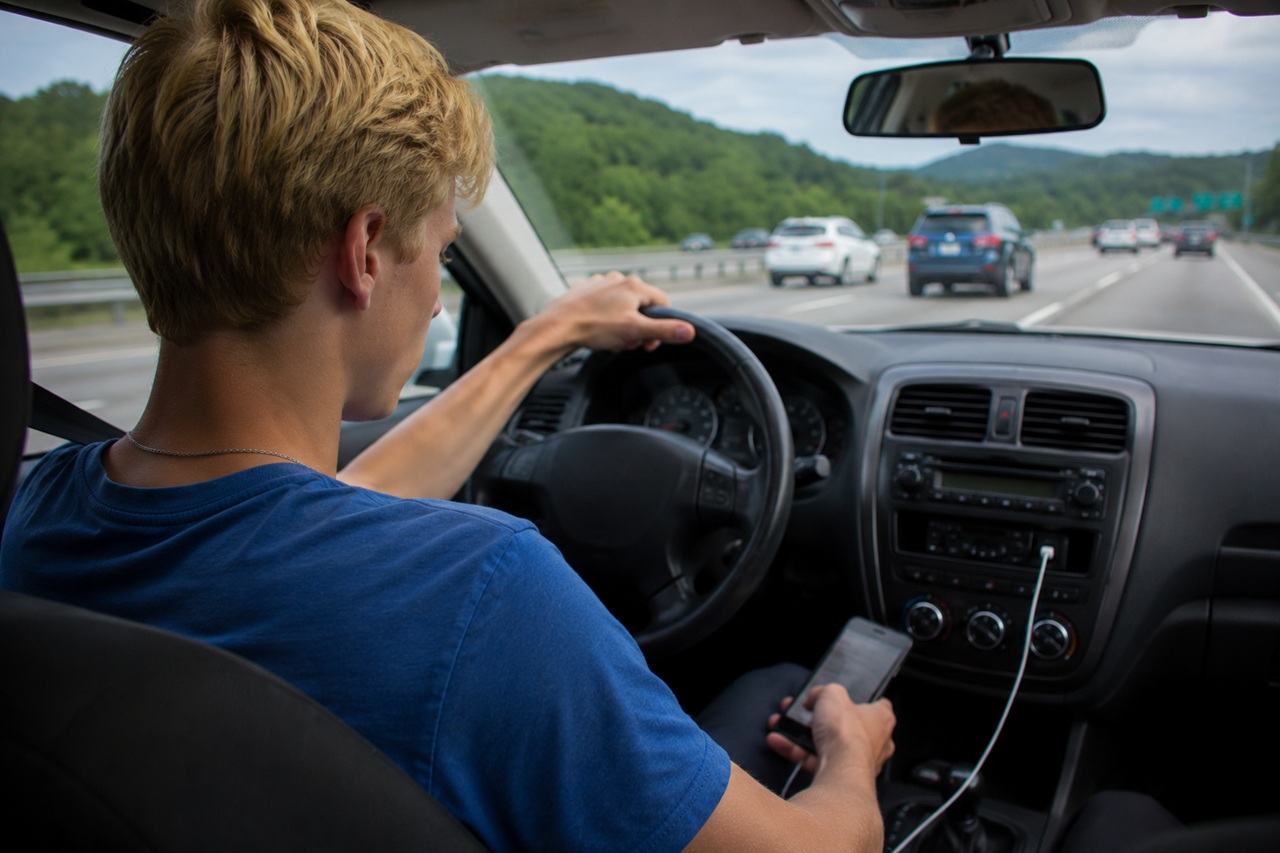
- Distracted Driving: Phones, passengers, music, and the general distractibility of adolescence combine to make teen drivers significantly more inattentive than adult drivers. For every mile driven, teen drivers between 16 and 19 are three times more likely to be involved in a deadly crash than adults.
- Speeding: Speed amplifies every other risk factor, and teen drivers are statistically more likely to speed than adult drivers. On Tennessee's highways and surface streets, the combination of inexperience and excessive speed is one of the most dangerous dynamics on the road.
Tennessee's Training Gap Makes the Problem Worse
The third-in-nation fatality ranking isn't just a reflection of how many teens are driving in Tennessee. It also reflects a policy gap that sets the state apart from most of the country. According to The Tennessean's reporting, Tennessee is one of only 13 states that doesn't require formal driver education before issuing a license to a teen driver. A teenager in Tennessee can satisfy the state's graduated licensing requirements and obtain a license without ever sitting in a classroom or receiving instruction from a certified driving instructor.
Tennessee's graduated licensing system does include important safeguards, including a learner's permit stage, supervised driving requirements, and restrictions on passengers and nighttime driving during the intermediate license phase. But those requirements stop short of mandating the kind of structured, professionally supervised instruction that research consistently links to lower crash rates among new drivers. The Tennessean reported that data from driving education programs shows students who completed formal training were involved in significantly fewer accidents than those who did not.
For families whose loved ones are hurt by an inexperienced teen driver, that policy context matters. The question of whether a driver was adequately prepared for the conditions they encountered, and whether someone in a supervisory role over that driver bears any responsibility for the crash, is one that an experienced attorney knows how to investigate.
Who Can Be Held Responsible When a Teen Driver Causes a Crash
Crashes involving teen drivers often raise liability questions that go beyond the teen behind the wheel. Depending on the circumstances, the responsible parties can include:
- The Teen Driver: A driver of any age who causes a crash through negligence — whether by speeding, running a red light, driving while distracted, or failing to yield — is legally responsible for the injuries and losses that result. Tennessee's modified comparative fault standard allows an injured person to recover compensation as long as they are found to be no more than 50 percent at fault.
- The Teen's Parents: Under Tennessee's family purpose doctrine, parents who own or maintain a vehicle for family use can be held liable for crashes caused by a minor family member driving that vehicle. This doctrine is an important avenue of recovery in many teen driver cases because it opens access to the parents' auto insurance coverage.
- The Teen's Employer: If a teen driver was operating a vehicle for work purposes at the time of the crash, the employer may bear vicarious liability for the resulting injuries under the legal principle of respondeat superior.
- Other Negligent Drivers: In multi-vehicle crashes, another driver's negligence may have contributed to or caused the crash even when a teen driver was also involved. A thorough investigation of the full circumstances is essential to identifying every responsible party.
The Evidence That Matters Most in Teen Driver Crash Cases
Teen driver crash cases often turn on evidence that quickly disappears after the collision. The investigation that supports a strong claim includes:
- Cell phone records: Whether the teen driver was texting, calling, or using apps in the moments before the crash is often central to establishing negligence, and cell phone records can be obtained through the legal discovery process.
- Vehicle data: Many modern vehicles are equipped with event data recorders that capture speed, braking, and steering inputs in the seconds leading up to a crash. This data can directly contradict a driver's version of events.
- Social media and app data: Snapchat, Instagram, and other platforms create timestamped records that can place a phone in active use at the time of a crash.
- Witness statements: Bystanders and other drivers who saw what happened before impact are among the most valuable witnesses in any collision case.
- Police report and investigation: The responding officer's findings, including any citations issued, are important starting points, though they are rarely the complete picture of what happened.
Hurt in a Nashville Car Crash Involving a Teen Driver?
If you or someone you love was seriously injured in a crash involving a teen driver anywhere in Nashville, Goodlettsville, Hendersonville, or the surrounding communities, the Law Office of Eric Beasley is ready to help. We handle every car accident case on a contingency fee basis, meaning there are no upfront costs and you owe us nothing unless we recover compensation for you. Contact us today for a free case evaluation.
"I had an excellent experience with Mr. Beasley! His team was professional and very easy to work with throughout my case. I would definitely recommend his services." - Adeola A., ⭐⭐⭐⭐⭐