
A Spinal Cord Injury Can Change Nearly Every Part Of A Tennessee Injury Claim
September is Spinal Cord Injury Awareness Month, a time dedicated to raising awareness about the physical, emotional, and financial realities faced by people living with spinal cord injuries. For someone hurt because of another person's negligence, those realities can also make a Tennessee personal injury claim much more complicated than a case involving an injury expected to heal within weeks or months.
A spinal cord injury can affect mobility, independence, employment, relationships, housing needs, transportation, and medical care for years or even for life. The claim therefore can't focus only on the hospital bills sitting on the kitchen table today. It may need to account for future rehabilitation, lost earning capacity, assistive equipment, home modifications, personal care, and the permanent changes the injury has made to daily life.
Our Nashville personal injury lawyers at The Law Office of Eric Beasley know that catastrophic injury cases have to be built differently from ordinary accident claims. Attorney Eric Beasley has represented injured Tennesseans for 25 years, and our team looks beyond the initial diagnosis to determine what a serious injury is likely to cost a client over the months, years, and decades ahead.
September Is Spinal Cord Injury Awareness Month
Spinal Cord Injury Awareness Month is recognized each September to draw attention to the challenges faced by people living with spinal cord injuries and the importance of treatment, rehabilitation, accessibility, research, and long-term support.
Current data estimates that more than 18,000 new traumatic spinal cord injuries occur in the United States each year. Vehicle crashes remain one of the leading causes, accounting for roughly 37% of recent traumatic spinal cord injuries.
For accident victims, awareness also means recognizing that a spinal cord injury isn't simply a severe version of back pain. Damage to the spinal cord can interfere with communication between the brain and the rest of the body, potentially affecting movement, sensation, bladder and bowel function, breathing, sexual function, temperature regulation, and other essential functions.
Not Every Spinal Injury Is A Spinal Cord Injury
The distinction matters medically and legally.
A crash can cause a herniated disc, fractured vertebra, ligament damage, or another serious spinal injury without directly damaging the spinal cord. Those injuries may still support substantial compensation, especially when they require surgery or leave permanent limitations.
A spinal cord injury involves damage that disrupts neurological function. Depending on the location and severity of the damage, the person may experience weakness, altered sensation, partial paralysis, paraplegia, quadriplegia, or other permanent impairments.
Insurance companies can sometimes blur these distinctions when evaluating a claim. Detailed medical records, MRIs, CT scans, neurological examinations, rehabilitation records, and specialist opinions can help establish exactly what happened and how the injury affects the person over time.
That medical documentation can become especially important when an insurer tries to blame new symptoms on an older back or neck problem. A crash can still support compensation when it aggravates a pre-existing spinal condition, but the before-and-after medical evidence needs to show what actually changed.
The Claim May Need To Account For A Lifetime Of Medical Care
The initial hospitalization can be only the beginning.
A serious spinal cord injury may require surgery, inpatient rehabilitation, physical therapy, occupational therapy, medications, follow-up imaging, specialist treatment, mobility equipment, and treatment for secondary complications.
The costs can continue long after the accident case begins.
That means settling a claim based only on current bills can dramatically underestimate the true financial loss. A younger person with paraplegia or quadriplegia may need decades of treatment, equipment replacement, rehabilitation, personal assistance, and accessibility modifications.
The same principle applies when deciding what future losses should be included in an injury settlement. You usually get one opportunity to resolve the claim, so future medical and financial needs need to be investigated before a final release is signed.
Future Medical Costs Can't Be Based On Guesswork
An insurer may acknowledge that a person has a serious injury while still fighting over what future care will actually be necessary.
That's where expert evidence can become critical.
A physician may describe future surgeries, medications, or medical complications. Rehabilitation professionals can explain future therapy needs. A life care planner may evaluate equipment, home health care, transportation, accessibility, and other needs over the person's expected lifetime.
An economist may then calculate the projected financial cost of that care.
Consider a 30-year-old who becomes paraplegic after a truck crash. The case shouldn't be valued as though the wheelchair purchased during rehabilitation will last forever. Wheelchairs wear out. Vehicles need replacement. Homes and vehicles may need accessibility modifications. Medical complications can develop. Personal care needs can change as the injured person ages.
A serious claim has to look forward rather than freeze the person's life as of the date of settlement.
A Spinal Cord Injury Can Permanently Change Earning Capacity
Lost wages and lost earning capacity aren't the same thing.
Lost wages typically cover income already lost due to an injury. Lost earning capacity looks at what the injury may prevent someone from earning in the future.
Someone who worked in construction, manufacturing, delivery, nursing, warehouse work, or another physically demanding occupation may be unable to return to the same job after a serious back or spinal injury. Even if that person eventually returns to some form of employment, the new job may pay less or offer fewer opportunities for advancement.
Other injured people may require significant retraining before they can return to the workforce at all.
A Tennessee claim may therefore need vocational experts and economists to evaluate education, work history, career trajectory, benefits, expected raises, retirement contributions, and the person's remaining work life.
Tennessee Treats Some Spinal Cord Injuries As Catastrophic Under Its Damages Law
Tennessee has a specific rule that becomes particularly important in spinal cord injury cases.
Under Tennessee Code § 29-39-102, noneconomic damages in most personal injury cases are generally capped at $750,000.
The statute increases that limit to $1 million when the injury qualifies as a "catastrophic loss or injury."
One of the injuries specifically listed in the statute is a spinal cord injury resulting in paraplegia or quadriplegia. These are among the most devastating injuries that can result from a serious truck accident.
That distinction matters. Tennessee doesn't automatically apply the higher $1 million cap to every neck injury, back injury, vertebral fracture, or even every type of spinal cord damage. The statutory definition specifically identifies spinal cord injuries resulting in paraplegia or quadriplegia.
The cap also applies to noneconomic damages rather than placing the same $750,000 or $1 million ceiling on documented economic losses such as medical costs and lost earnings.
Economic Damages Can Become The Largest Part Of A Catastrophic Injury Claim
Because lifetime financial costs can be enormous, economic damages after a serious accident can become one of the most important parts of a spinal cord injury case.
Potential economic losses can include:
- Emergency medical treatment
- Hospitalization and surgery
- Inpatient and outpatient rehabilitation
- Physical and occupational therapy
- Future medical treatment
- Prescription medication
- Wheelchairs and other mobility equipment
- Home health aides and attendant care
- Accessible transportation
- Home modifications
- Past lost wages
- Future lost earning capacity
The difference between a properly documented lifetime-care claim and one built only around existing medical bills can be enormous.
Economic losses also shouldn't be confused with pain, emotional suffering, permanent impairment, and loss of enjoyment of life. Both categories can matter, but they answer different questions about what the injury has taken from the person.
The Injury Can Affect A Spouse And Family Too
A spinal cord injury rarely changes only one person's life.
A spouse may become a caregiver. Parents may need to alter work schedules. Children may experience major changes in how the family functions. A couple may lose activities and routines they once shared.
Tennessee law recognizes certain derivative losses, including loss of consortium in appropriate cases. But the state's noneconomic damages cap generally applies to the injured person's aggregate noneconomic damages and derivative noneconomic claims.
That makes it especially important to separately identify financial losses that can be documented as economic damages.
A Quick Insurance Settlement Can Be Especially Dangerous In An SCI Case
An insurer may approach a seriously injured person while the medical picture is still developing.
The offer can sound substantial because the numbers involved are larger than in an ordinary accident claim.
That doesn't necessarily make it adequate.
A person who recently left inpatient rehabilitation may not yet know whether another surgery will be necessary, what level of independence they'll regain, whether they'll return to work, or how much assistance they'll require several years from now.
Once a settlement is finalized and a release is signed, the injured person generally can't return years later because the money has run out or future care has become more expensive than expected.
That is why the severity and permanence of an injury can have such a major effect on settlement value. Paralysis, nerve damage, permanent impairment, and future medical needs can transform the financial scope of a claim.
Insurance Coverage Can Become A Major Issue
A catastrophic injury can create damages far beyond the liability limits carried by an ordinary driver.
That makes identifying every potential source of compensation essential.
A serious car accident claim may involve the negligent driver's liability coverage, an umbrella policy, employer coverage if the driver was working, or the injured person's own uninsured or underinsured motorist coverage.
A commercial truck case can involve even more layers of insurance and potentially responsible companies.
Policy limits don't determine how badly someone was hurt. They do affect where compensation can actually come from, which is why coverage investigation should begin early.
Car, Motorcycle And Truck Crashes Can All Cause Spinal Cord Injuries
Motor vehicle crashes remain a leading source of traumatic spinal cord injuries nationwide.
A spinal injury from a car accident can result from a rear-end collision, rollover, head-on crash, T-bone collision, or another violent impact.
Motorcyclists face even less physical protection. A rider thrown from a bike can suffer a neck or spinal cord injury in a motorcycle accident after striking a vehicle, pavement, guardrail, or another fixed object.
The danger can become particularly severe in a Tennessee truck accident because of the difference in size and weight between a tractor-trailer or other commercial vehicle and a passenger vehicle.
Our $975,000 Dump Truck Case Shows Why Spinal Injuries Need Time To Develop
Our firm's case results include a $975,000 settlement after a dump truck rear-ended a vehicle and caused injuries requiring two back surgeries.
That wasn't a paralysis case, but it illustrates an important issue in serious spinal injury claims. What begins as back pain after a crash can progress into nerve symptoms, failed conservative treatment, specialist care, surgery, and continuing limitations.
The case couldn't be evaluated responsibly based only on how the client felt during the first few days after the collision. The medical timeline had to develop far enough to show what the injury actually required.
We've also handled a tractor-trailer chain-reaction crash involving back surgery and continuing limitations. That case resolved for $245,000 after a tractor-trailer struck another vehicle and pushed it into our client.
Medical Evidence Has To Show More Than A Diagnosis
An MRI showing spinal cord damage can be powerful evidence, but a catastrophic injury case can't stop there.
A serious injury case built the right way needs to document what the injury actually does to the person's life.
Useful evidence may include:
- Hospital and surgical records
- MRI, CT, and other diagnostic imaging
- Neurological examinations
- Rehabilitation records
- Physical and occupational therapy evaluations
- Wheelchair and assistive-device evaluations
- Home accessibility assessments
- Employment and earnings records
- Vocational evaluations
- Life care plans
- Testimony from family members and caregivers
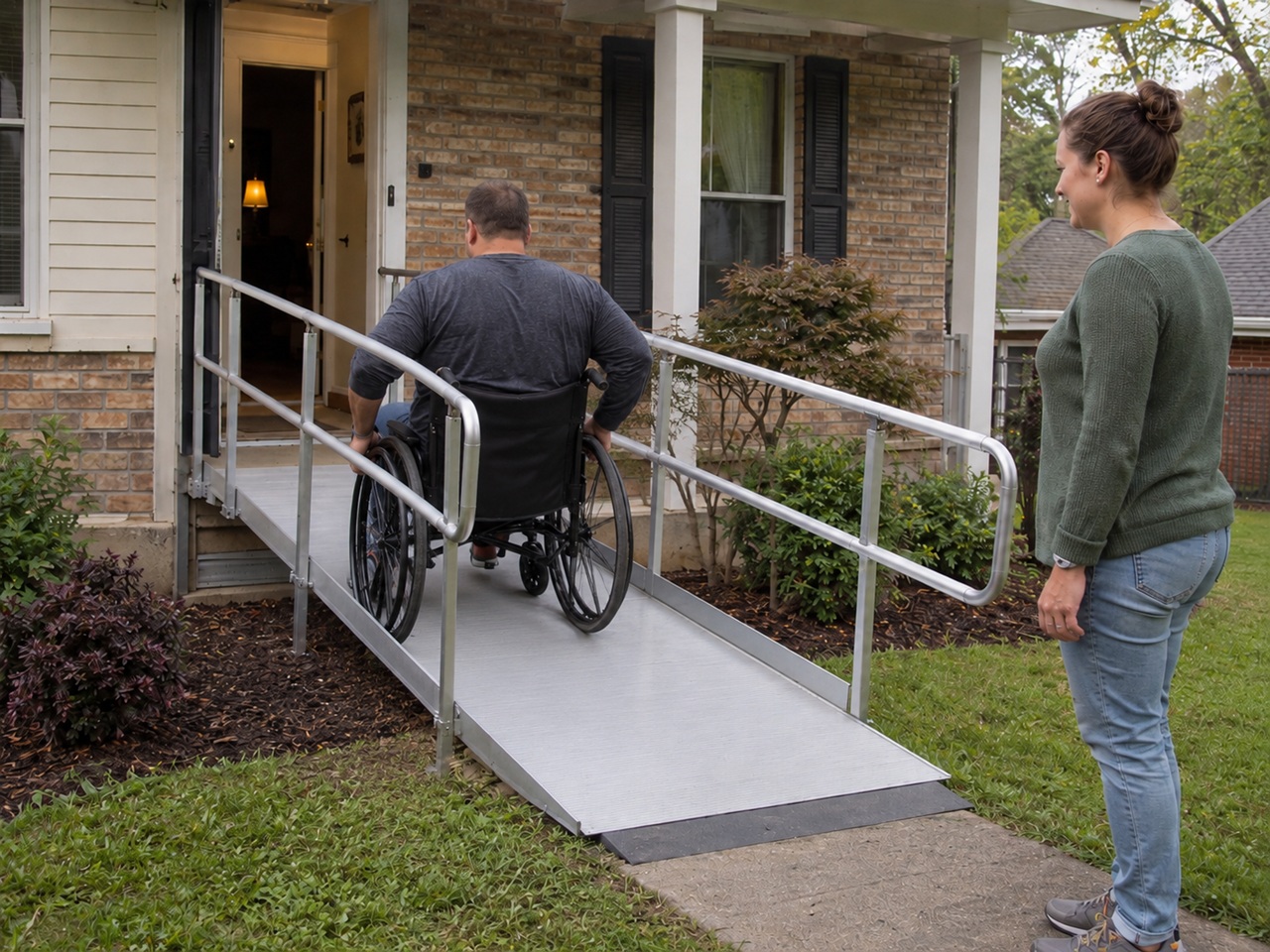
A photograph of a ramp installed at the front door can tell part of the story. So can an occupational therapist's report explaining why the bathroom needs to be rebuilt. A former supervisor can describe the physical work the injured person can no longer perform.
The strongest evidence often connects the medical diagnosis to the practical consequences of living with the injury.
Tennessee's One-Year Filing Deadline Makes Early Investigation Critical
There is another reason catastrophic injury claims can't be allowed to drift.
Tennessee generally gives injured people only one year to file most personal injury lawsuits.
That is an unusually short statute of limitations. A spinal cord injury case may require accident reconstruction, medical experts, vocational analysis, insurance investigation, employment records, and long-term care projections, yet the legal clock can be running while the injured person is still in rehabilitation.
Early investigation also matters for reasons unrelated to the filing deadline. Physical evidence disappears. Vehicles get repaired. Surveillance video gets erased. Witnesses become harder to locate. Electronic data can be overwritten. Insurance companies may begin investigating the accident almost immediately.
Waiting until the medical treatment is finished before speaking with an attorney can therefore create evidence problems even when the injured person is still technically within the one-year deadline.
Don't Let The Claim Be Valued Before The Future Is Understood
Spinal Cord Injury Awareness Month is about recognizing what life after SCI actually involves.
The same perspective belongs in a personal injury claim.
A spinal cord injury isn't just the surgery already performed or the rehabilitation bill already received. It's the wheelchair that will eventually need to be replaced. It's the job a person may never return to. It's a home that may need modifications. It's help with tasks that used to be routine. It's medical complications that may appear years later.
Those future consequences need evidence, planning, and qualified expert support before anyone can responsibly evaluate what a claim is worth.
Our Nashville Personal Injury Lawyers Handle Tough Injury Cases
Attorney Eric Beasley has spent 25 years representing people injured throughout Nashville and Middle Tennessee. He has earned membership in the Million Dollar Advocates Forum, recognition from The National Trial Lawyers Top 100, and recognition as a Mid-South Super Lawyer. He also teaches other Tennessee attorneys about personal injury law through continuing legal education programs.
Our case results include millions of dollars in settlements and verdicts involving serious car, truck, motorcycle, and commercial vehicle accidents.
If you or someone you love suffered a spinal cord injury because of a car crash, truck wreck, motorcycle accident, dangerous property condition, or another person's negligence, contact The Law Office of Eric Beasley for a free consultation. We'll investigate what caused the injury, identify available insurance and responsible parties, document the full impact of the SCI, and determine what future losses need to be included before discussing a settlement.
"Mr. Beasley was very thorough, communicative, attentive, super honest, confident, fair and just all around a great guy that is very trustworthy. It was a tough case but he stuck through it and helped me get through this injury with confidence and respect." - Amber M., ⭐⭐⭐⭐⭐