
Lane Rules, Vehicle Damage, and Video Usually Show Which Driver Left Their Lane
Proving fault in a sideswipe accident in Nashville usually comes down to one question. Which driver moved out of their lane? Tennessee law requires drivers to stay in their lane until they're sure a move is safe. A strong Nashville car accident claim uses physical evidence, video, and witnesses to show who crossed the line.
That can be harder than it sounds. Sideswipes often happen fast, at highway speed, with no one watching closely. Each driver may sincerely believe the other one drifted over. Insurance adjusters know this, and they often push both drivers to share the blame. In Tennessee, a shared-fault finding can reduce your compensation or wipe it out completely.
At The Law Office of Eric Beasley, our Nashville car accident lawyers don't accept a fault split just because an adjuster suggests one. Attorney Eric Beasley isn't afraid to take on tough cases, and in a he-said, she-said sideswipe, our team works to find the evidence that settles the argument.
|
Key Points
|
Who Is Usually at Fault in a Sideswipe Accident?
Fault usually rests with the driver who left their lane. Tennessee Code § 55-8-123 requires drivers to stay as nearly as practicable within a single lane. It also bars moving out of that lane until the driver has first made sure the move is safe. A separate rule, § 55-8-143, requires drivers to signal when a turn or lane movement could affect other traffic.
Those rules give a sideswipe claim a clear starting point. The harder part is proving which driver broke them. A driver who merges from an on-ramp without a safe gap is often at fault, and so is a driver who drifts while texting or skips a blind-spot check. When two drivers move into the same lane at once, both may share the blame. Those details all factor into determining fault after a car accident.
What Evidence Proves Who Caused a Sideswipe Crash?
Sideswipe cases are often won or lost on physical proof rather than memories. The most useful types of evidence are listed below.
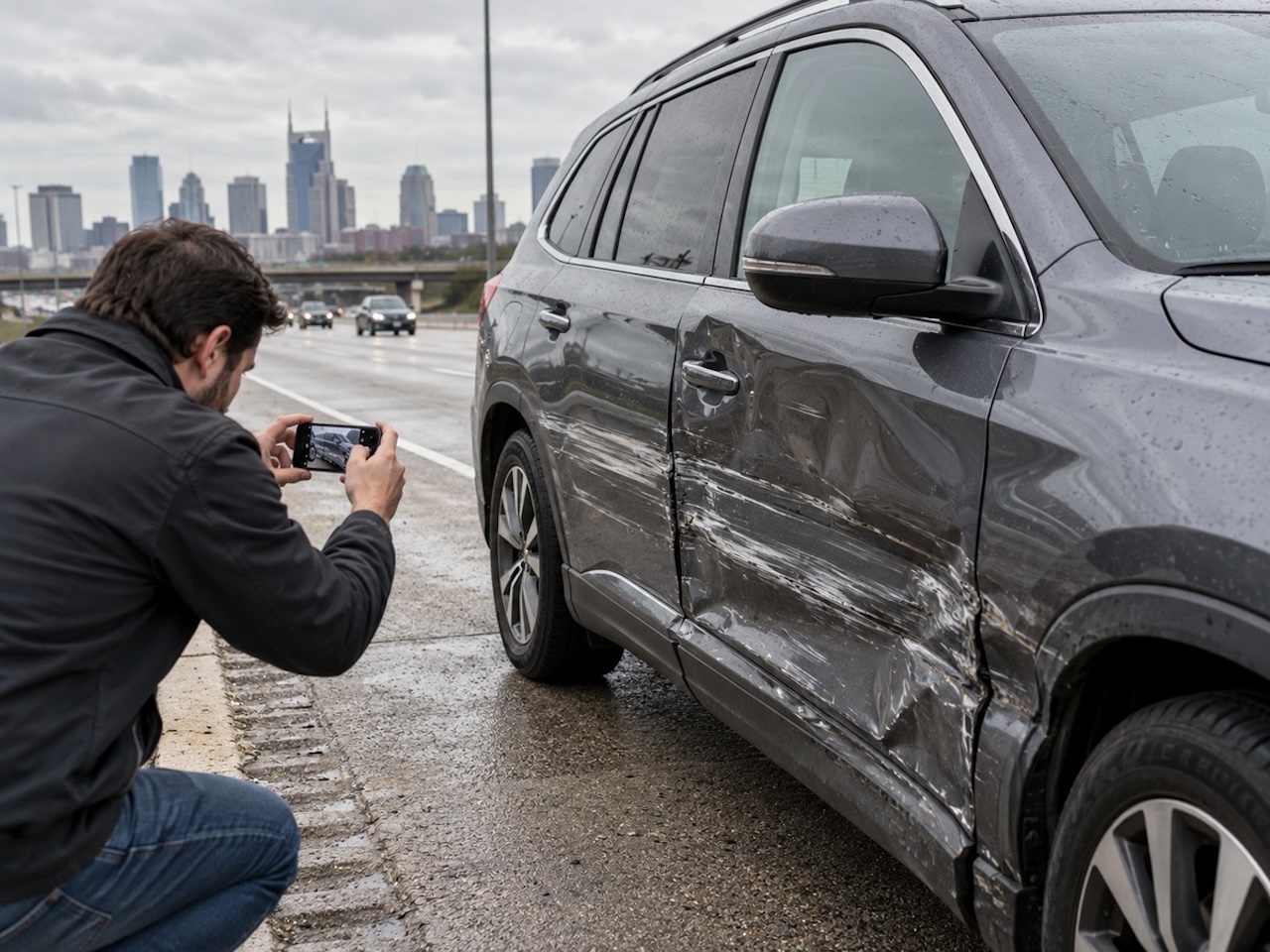
- Vehicle Damage Patterns – Scrape marks, crease direction, and the point where damage starts can show which vehicle moved laterally into the other.
- Paint Transfer and Debris – Paint left on each car and where debris landed can help place the crash in a specific lane.
- Video Footage – Dash cameras, traffic cameras, and nearby business cameras may capture the moment a car crossed the line. Getting video of a Tennessee car accident usually requires a fast request.
- Witness Statements – Drivers who were behind or beside the crash often saw which car moved first. Their accounts carry weight because they have no stake in the outcome.
- Phone Records – Call, text, or app records from the moment of the crash can help prove a driver was distracted.
Much of this evidence has a short shelf life. Video can be overwritten, cars get repaired, and witnesses move on. Tennessee also gives most injured people only one year to file a car accident lawsuit. Starting the investigation early protects both the evidence and your right to use it.
Imagine two cars traveling side by side on I-24 when they collide. One driver says the other drifted left, and the other says the reverse. The scrape on one car starts at the front fender and runs backward, while the damage on the other car pushes inward from the side. That pattern can show which car moved over and closed the gap.
If the Police Report Blames You for the Sideswipe
A police report is important, but it isn't the final word on fault. In many sideswipes, the officer arrives after the crash and relies on what each driver says. An officer may also make a quick call at a busy scene. Knowing how to read your Tennessee car accident report helps you spot errors early.
Reports can be overcome with better evidence. Our firm obtained a $100,000 recovery after witnesses contradicted a Tennessee Highway Patrol crash report. That result shows why a report that blames you shouldn't end your claim. Witness interviews, video, and damage analysis can all tell a different story than the officer's first impression.
How Shared Fault Can Reduce Your Recovery in Tennessee
Tennessee follows a modified comparative fault rule. You can recover damages only if your share of fault is less than the other driver's, and your compensation then drops by your percentage of fault. If you're found 50% or more at fault, you can't recover anything from the other driver. That's why insurers in sideswipe cases often argue the blame should be split evenly.
Fault percentages are often the most contested part of a sideswipe claim, and adjusters know it. The table below uses a hypothetical $100,000 in damages to show how different fault findings change the outcome. Even a small shift in percentages can mean thousands of dollars, and at the 50% line, a strong injury claim can disappear completely.
| Your Share of Fault | Other Driver's Share | What You Could Recover |
|---|---|---|
| 0% | 100% | $100,000 |
| 20% | 80% | $80,000 |
| 40% | 60% | $60,000 |
| 50% | 50% | $0 |
Why Sideswipes Are Common on Nashville Highways
Nashville's interstates create constant lane changes. I-24, I-40, and I-65 all carry heavy traffic through merges, lane drops, and short exit ramps. Drivers cutting across lanes to make an exit can sideswipe someone in the next lane. Blind spots and distracted driving add to the danger, along with work zones that shift or narrow lanes.
Highway sideswipes can also turn serious fast. A light impact at 65 mph can push a car into a barrier, across lanes, or off the road. Speed differences between lanes make it worse, since a driver weaving through slower traffic has less time to spot a car beside them.
Straight Talk About Who Caused Your Sideswipe Crash
Our firm's approach is straight talk, hard work, and real results. In a sideswipe case, that means telling you the truth about what the evidence shows and then working to prove it. We track down video, talk to witnesses, and study the damage on both vehicles. When an insurer tries to split the blame, we push back with facts.
A sideswipe can leave you with injuries, a damaged car, and a fight over a few feet of pavement. If another driver moved into your lane, talk with our Nashville team about what happened. Your consultation is free, and we can start gathering evidence before it's gone.
"After 11 months of the insurance company looking out for its own interests, because it covered both parties, I discovered that they had decided each driver shared equal responsibility in the accident... I called Eric, and he jumped in immediately. He got my hospital bills paid, and he got me compensation for my injuries." — John J., ⭐⭐⭐⭐⭐