
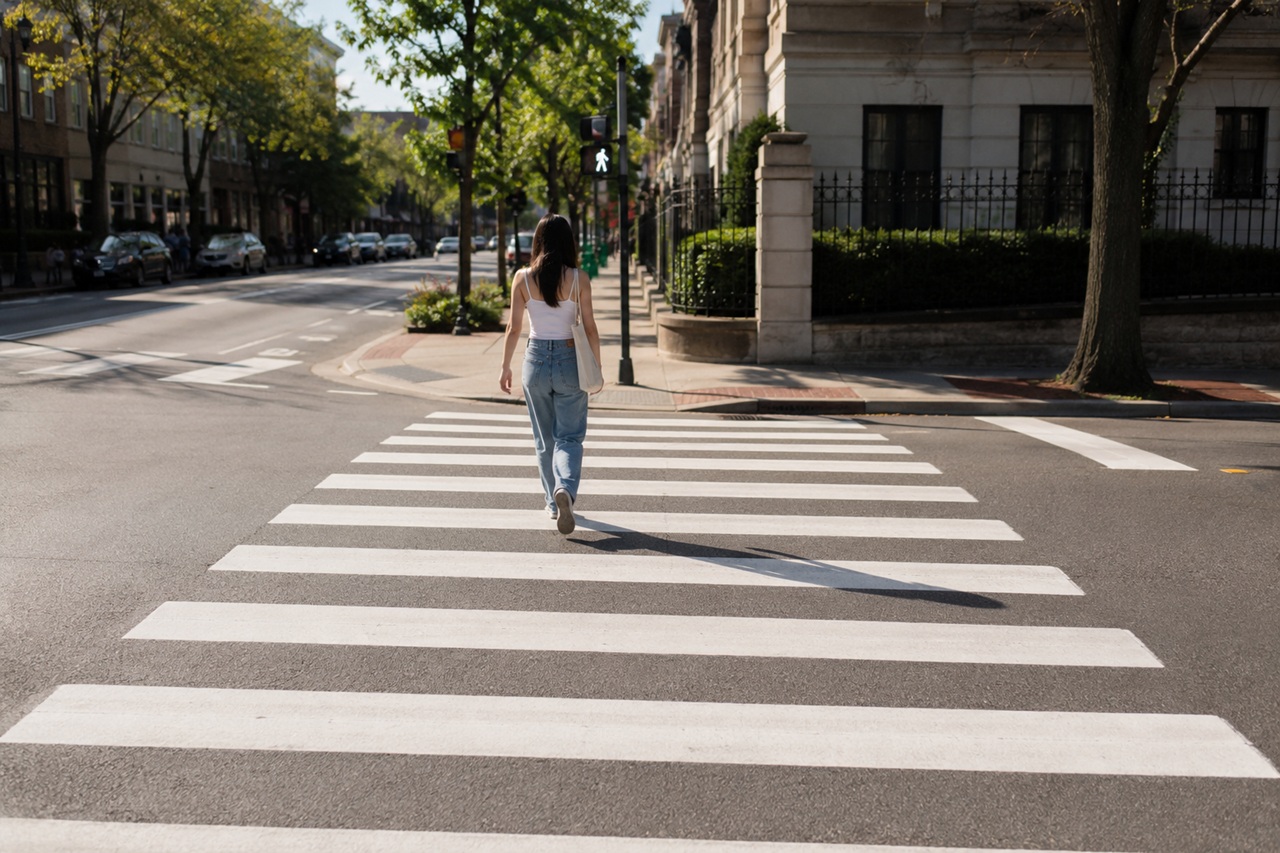
What North Nashville's Most Dangerous Corridor Can Tell Us About Who Gets Left Behind When Roads Are Built for Cars
The Nashville Department of Transportation recently broke ground on a safety overhaul of Jefferson Street, one of the city's most historically significant and most persistently dangerous corridors for pedestrians. According to WKRN, the project is part of Nashville's Choose How You Move safety plan and includes safer crosswalks, new sidewalks, shortened pedestrian crossing distances, better bike access, and traffic calming measures designed to slow vehicles and reduce the risk of crashes in a neighborhood that has long borne the consequences of car-centric infrastructure decisions.
The project is overdue. Jefferson Street community ambassador Poet Williams put it plainly: pedestrian safety needs to get better in Nashville, and something as simple as a crosswalk makes a driver understand that people walk here. That statement captures something that Nashville pedestrians and cyclists have known for years while waiting for the city to act on it.
When pedestrian and bicycle crashes happen because drivers aren't looking, roads aren't designed to protect walkers, or crosswalks signal one thing while drivers do another, the Nashville pedestrian accident lawyers at the Law Office of Eric Beasley are ready to step in and fight for the people who were hurt. Attorney Eric Beasley has spent 25 years handling serious injury cases across Tennessee, and he knows how to build the cases that hold negligent drivers and their insurers accountable.
The Story Behind Jefferson Street's Dangerous Conditions
Jefferson Street didn't become dangerous by accident. When I-40 was constructed over the corridor decades ago, NDOT's own leaders acknowledge that what had been a thriving community was fundamentally transformed. Businesses closed. The neighborhood's economic and social infrastructure was disrupted. And the street itself was left with the kind of high-speed, pedestrian-hostile conditions that result when highway-scale engineering meets a neighborhood that still has people trying to cross the road on foot.
The pop-up crosswalk NDOT and the Civic Design Center recently installed near the Elks Lodge, featuring bright colors and planters designed to slow vehicles, is a direct acknowledgment that the existing conditions don't adequately communicate to drivers that pedestrians are present and have the right of way. That kind of tactical urbanism project is a starting point, not a solution, and the full corridor plan currently accepting community input represents the longer-term vision for what Jefferson Street could become.
For people who live, work, and travel on foot in North Nashville, these improvements can't come soon enough. But they do nothing for the people who were already hurt before the first crosswalk was painted.
Where Nashville Stands on Pedestrian Safety
Jefferson Street is one piece of a broader pedestrian safety picture that Nashville has struggled with for years. The city consistently ranks among the most dangerous in the Southeast for people on foot, and the same infrastructure failures that shaped Jefferson Street, high-speed arterials, inadequate crosswalks, poor lighting, and roads designed primarily for vehicles, show up across Nashville's most dangerous roads and intersections.
Tennessee's pedestrian fatality numbers reflect that reality. Pedestrian accidents in Tennessee regularly produce some of the most serious and highest-value injury claims our firm handles, precisely because the forces involved when a vehicle strikes a person on foot are so disproportionate. There is no structural protection for a pedestrian. The injuries that result range from severe orthopedic fractures to traumatic brain injuries to fatal outcomes, and the financial and personal consequences for victims and their families can last for years.
What Drivers Are Legally Required to Do Around Pedestrians in Tennessee
Tennessee law is clear about the obligations drivers carry when pedestrians are present. Under Tennessee Code Annotated Section 55-8-136, drivers must exercise due care to avoid colliding with pedestrians and must give warning when necessary. When a pedestrian is in a crosswalk, drivers must yield the right of way.
The problem is that those legal obligations don't automatically translate into driver behavior, particularly on corridors like Jefferson Street where the road design itself has historically communicated something different. Drivers who are traveling at speeds inconsistent with the surrounding environment, who are distracted, or who simply don't expect pedestrians to be crossing at a given location can fail to yield even when the law requires it. When that failure causes a crash, Tennessee's fault-based system places the legal responsibility on the driver who didn't do what the law required.
Tennessee follows a modified comparative fault standard, which means an injured pedestrian can recover compensation as long as they are found to be no more than 50 percent at fault for the crash. In the vast majority of pedestrian crash scenarios, the driver bears the primary fault, and the injured pedestrian's recovery options include medical expenses, lost wages, pain and suffering, and, in fatal cases, wrongful death compensation for surviving family members.
The Specific Crash Types That Send Nashville Pedestrians and Cyclists to the Hospital
The crashes that produce the most serious injuries to people on foot and on bikes in Nashville follow recognizable patterns. Each involves a driver failure that the law treats as negligence:
- Failure to Yield at Crosswalks: A driver who proceeds through a marked or unmarked crosswalk without yielding to a pedestrian who has entered the crossing is violating Tennessee law and bears direct liability for resulting injuries. This is one of the most common pedestrian crash scenarios on Nashville corridors, and it's exactly the behavior the Jefferson Street crosswalk improvements are designed to interrupt.
- Distracted Driving Crashes: A driver who is looking at a phone, adjusting navigation, or otherwise not attending to the road ahead is operating in a condition that makes them unable to respond to a pedestrian or cyclist in time to avoid a crash. Texting and driving is particularly common on Nashville's arterial roads.
- Left-Turn Crashes at Intersections: A driver turning left across oncoming traffic who doesn't check for pedestrians entering the far-side crosswalk creates a broadside or striking scenario that can happen faster than either the driver or the pedestrian can react. Intersection accidents involving pedestrians are among the most severe crash types in the city.
- Hit While Riding a Bike: Nashville's bicycle infrastructure has improved in recent years but remains insufficient on many corridors, and cyclists who are sharing lanes with high-speed vehicle traffic face real exposure when drivers don't give adequate clearance or fail to yield at intersections.
- Parking Lot Accidents: Pedestrian crashes in parking lots and at driveway exits occur when drivers are focused on entering or exiting traffic rather than watching for people on foot. These crashes happen at lower speeds but still produce significant injuries, particularly for older adults.
Protecting Yourself After a Nashville Pedestrian or Bicycle Crash
The steps taken after a crash directly affect the strength of a legal claim. A few things matter most:
Knowing what to do if you're hit by a car while walking is something most people don't think about until it happens. Getting medical attention immediately matters both for health outcomes and for documentation purposes, because delayed symptoms are common in pedestrian crashes and insurance companies look for gaps in treatment as a reason to minimize claim value. Photographs of the scene, the crosswalk or lack thereof, the vehicle, and any visible injuries should be taken before the scene clears if at all possible. Witness contact information should be collected immediately.
Video footage of a Tennessee car accident can be decisive in pedestrian crash cases, where the question of whether a driver yielded, was distracted, or was traveling at appropriate speed can otherwise come down to competing accounts. Surveillance cameras at nearby businesses and traffic cameras at signalized intersections have limited retention windows, and an attorney who moves quickly to preserve that footage can secure evidence that would otherwise be gone within days.
Contact a Nashville Pedestrian Accident Lawyer
If you or someone you love was seriously hurt while walking or riding a bike on a Nashville road, do you need a pedestrian accident lawyer? The answer is almost always yes, and the sooner you have one, the better your position. The Law Office of Eric Beasley handles pedestrian and bicycle accident cases throughout Nashville, Goodlettsville, Hendersonville, and the surrounding communities, with no upfront costs and no fees unless we recover compensation for you. Contact us today for a free case evaluation.
"My wife and I were in a car wreck where we were hit from behind while standing still at a four-way stop light. We were both injured, but my injury was by far the worst. After over a year with that lawyer, the case was almost gone. We heard about Eric Beasley and hired him instead, and he went to work on our case. A few months later, we had our case heard, and it was soon settled out of court. Our car was replaced, and all of the medical bills were taken care of. Mr. Eric Beasley won our case and our confidence." — Sam C., ⭐⭐⭐⭐⭐