
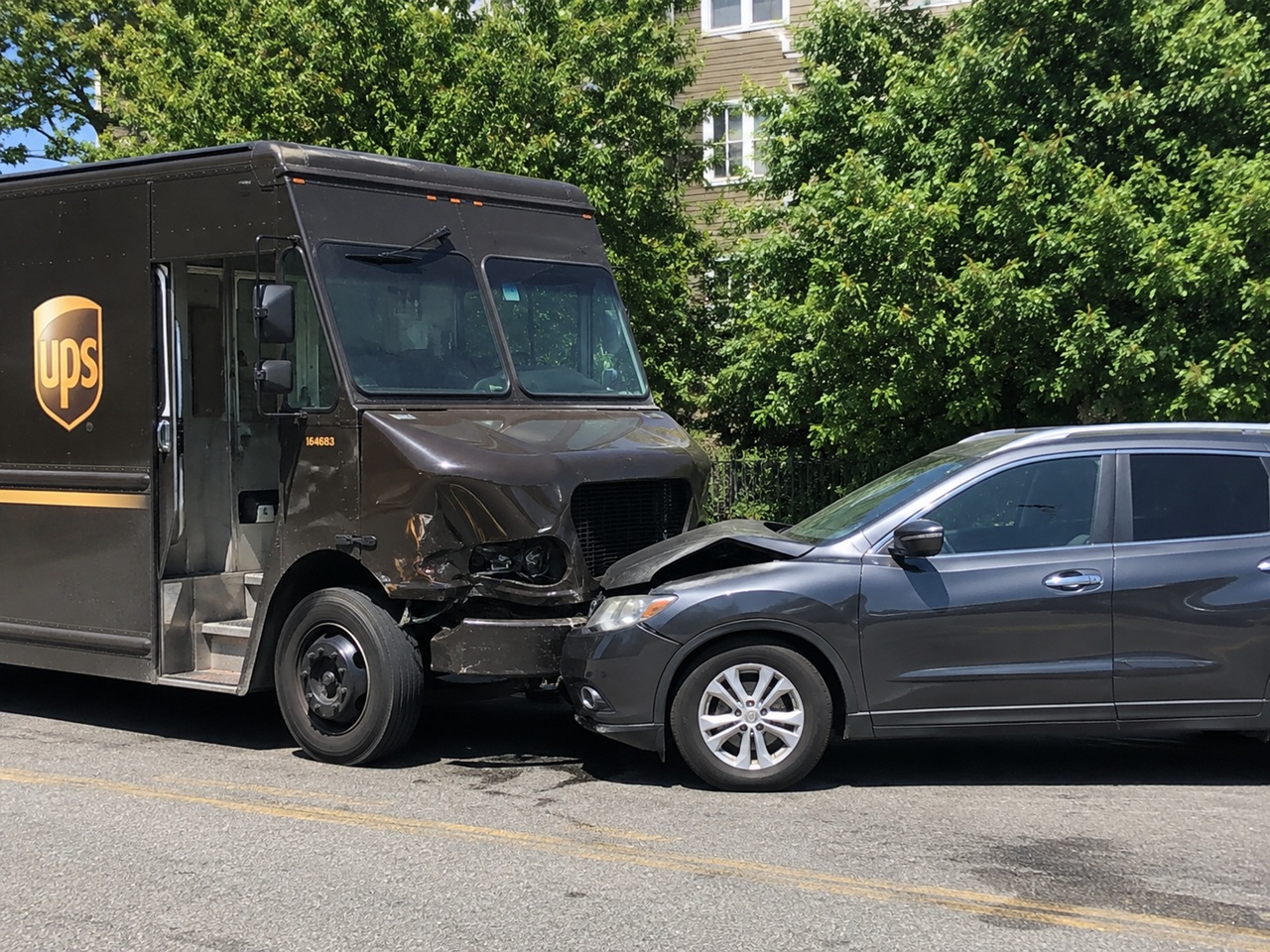
The Logo On The Truck Doesn't Always Tell You Who's Legally Responsible
A FedEx or UPS truck hits your car on I-65 in Nashville. The driver was making deliveries, the company logo covers the side of the truck, and the crash report identifies the commercial vehicle. It seems obvious who should pay.
In reality, determining who's responsible after a delivery truck accident in Tennessee can require looking behind the logo. The driver, the driver's employer, the company that owns the vehicle, a delivery contractor, and one or more insurance carriers may all become part of the claim.
At The Law Office of Eric Beasley, we investigate commercial vehicle crashes to determine who actually employed the driver, who owned the truck, what the driver was doing when the crash happened, and which insurance policies may apply. Those details can make a major difference when a FedEx or UPS accident causes serious injuries.
UPS And FedEx Don't Necessarily Use The Same Driver Structure
One of the first things most people assume is that the company name on a delivery truck must be the driver's employer. That can be true, but it shouldn't be assumed without checking.
UPS publicly describes its package delivery drivers as company employees, including Teamsters-represented full-time delivery drivers. If a UPS employee negligently causes a crash while making deliveries or otherwise acting within the scope of employment, UPS may potentially bear responsibility under principles of employer liability.
FedEx can be more complicated. Parts of the FedEx transportation network have used independent businesses, contracted service providers, fleet owners, and owner-operators to provide transportation and delivery services. That means a FedEx-branded vehicle may require additional investigation to identify the legal entity that employed the driver or operated the vehicle.
This distinction isn't just paperwork. Tennessee courts have recognized that whether one company can be held responsible for another driver's negligence may depend on evidence of an employment, agency, partnership, or other legally significant relationship.
The Driver's Employer May Be Responsible For A Work-Related Crash
Tennessee follows the doctrine of respondeat superior, which can make an employer responsible for negligent conduct committed by an employee while acting within the course and scope of employment.
A delivery driver who causes a crash while driving an assigned route, transporting packages, traveling between stops, or performing another job duty may create potential liability for the employer as well as the driver.
That's one reason truck accident liability in Tennessee often extends beyond the person sitting behind the wheel.
The analysis can become more difficult when the company argues that the driver was off duty, had deviated from the delivery route for personal reasons, or worked for a separate contractor. Employment records, dispatch information, route data, delivery scans, GPS records, contracts, and communications can all become important.
A Contractor Label Doesn't End The Investigation
Suppose a FedEx-branded delivery van hits you, but the driver technically works for a separate delivery company.
That doesn't mean the investigation stops with the contractor.
Tennessee generally doesn't impose vicarious liability for every act of an independent contractor. But calling someone an independent contractor doesn't automatically decide the legal relationship either. Depending on the facts, questions may arise about who controlled the work, who employed the driver, who owned the vehicle, and whether another company engaged in its own negligent conduct.
A Tennessee Court of Appeals case, Bowman v. Benouttas, illustrates why these relationships matter. The court considered whether a company that described itself as merely a shipment broker could be held vicariously liable for a delivery driver's negligence. The claim against that company ultimately failed because the required agency, joint-venture, or partnership relationship had not been established.
The practical lesson is important: the company structure needs to be proven rather than guessed from the truck's paint job.
The Vehicle Owner's Insurance May Be The First Policy In Line
Identifying the responsible parties and identifying the insurance that pays are related questions, but they aren't always identical.
Under Tennessee Code § 56-7-1101, the owner's automobile insurance is generally primary when someone is operating the vehicle with the owner's permission and within the scope of that permission. Different rules can apply to certain leased vehicles and other arrangements.
In a delivery-truck case, that can mean investigating:
- The Vehicle Owner's Commercial Auto Policy: The company or contractor that owns the FedEx or UPS delivery vehicle may carry the primary liability coverage.
- The Driver's Employer: An employer may have commercial liability coverage protecting the business against claims arising from employees driving for work.
- Additional Corporate Coverage: Depending on the business relationships and contracts involved, other applicable policies may need to be identified.
- Your Own UM/UIM Coverage: If available liability coverage is insufficient, your own uninsured or underinsured motorist coverage may become important depending on your policy and the circumstances.
This is one reason dealing with insurance companies after a Tennessee truck accident can become much more complicated than a claim involving two privately owned cars.
More Than One Company May Share Responsibility
Delivery truck cases don't always involve a single negligent decision.
The driver may have been speeding or distracted. The employer may have failed to properly train or supervise the driver. A vehicle owner may have ignored a maintenance problem. A company may have created delivery expectations that encouraged unsafe behavior.
Depending on the evidence, potentially responsible parties can include:
- The Delivery Driver for negligent driving.
- The Driver's Employer when the driver was acting within the scope of employment.
- The Vehicle Owner when ownership or maintenance creates separate responsibility.
- A Delivery Contractor or Service Provider that employed, supervised, or dispatched the driver.
- A Maintenance Company if negligent repairs contributed to a mechanical failure.
- A Vehicle or Parts Manufacturer if a defective component contributed to the crash.
That layered responsibility is common in commercial truck accident claims. Each company and insurer may have an incentive to argue that someone else deserves a larger share of the blame.
Delivery Schedules Can Become Part Of The Liability Investigation
Package delivery is built around time. Drivers may have hundreds of stops, scheduled pickups, route expectations, and customers waiting for packages.
That doesn't excuse unsafe driving.
A delivery driver who speeds through an intersection, follows another vehicle too closely, makes an unsafe turn, backs into traffic without looking, or checks a handheld device while moving can still be responsible for the resulting collision.
Our attorneys also investigate whether commercial delivery pressures contributed to unsafe driving. Dispatch data, route timing, delivery records, electronic communications, and vehicle information may help show what was happening before the crash.
The Delivery Company's Records May Tell A Different Story Than The Driver
Imagine a delivery driver tells police that traffic suddenly stopped and there was no time to avoid rear-ending your vehicle.
The company's electronic records may tell a different story.
GPS data could show the truck's speed. Delivery scans could establish where the driver had been moments before the crash. Phone or dispatch records could reveal communications around the time of impact. Vehicle data may show braking or other activity immediately before the collision.
A thorough truck accident investigation can also involve driver qualification files, training records, maintenance information, witness statements, photographs, surveillance video, and the commercial vehicle itself.
Some of that evidence may not exist forever. Companies can have document-retention policies, digital information can be overwritten, and vehicles can be repaired or returned to service. Preserving the evidence early can become one of the most important parts of the case.
Eric Beasley Has Handled Commercial Vehicle Cases Where Liability Wasn't Obvious
Commercial vehicle liability doesn't always begin with the truck physically striking the injured person's vehicle.
In one case handled by Attorney Eric Beasley, a work truck pulled out from a private driveway and forced another vehicle into oncoming traffic. That vehicle then collided head-on with our client. The commercial truck never made direct contact with their car.
The work truck's insurer initially refused to accept responsibility, and the police report didn't assign fault to that truck. Through litigation, discovery, depositions, and preparation for trial, Beasley established why the work truck's actions still mattered. The case ultimately resulted in a $1.25 million settlement.
That case occurred outside Tennessee and doesn't predict the value of another claim. But it illustrates a point that applies directly to FedEx and UPS crashes: identifying who caused the collision and who should pay can require looking well beyond the first name written on the crash report.
Your Own Insurance Can Matter Even In A Commercial Vehicle Case
Most people assume a company as large as FedEx or UPS means insurance will never be an issue. The existence of a recognizable brand doesn't necessarily answer which policy applies or whether the available limits will fully cover a catastrophic injury.
Tennessee automobile policies generally include uninsured motorist protection unless the named insured rejected it in writing or selected lower limits. That coverage can also provide protection when available liability insurance is less than the insured person's applicable UM/UIM limits.
Having strong uninsured and underinsured motorist coverage in Tennessee can therefore provide another potential source of compensation when the available commercial liability coverage doesn't resolve the entire loss.
Tennessee Gives Injury Victims Very Little Time To File Suit
Commercial vehicle claims can take time to investigate, but Tennessee's filing deadline doesn't give injured people much room to wait.
Under Tennessee Code § 28-3-104, most personal injury lawsuits must be filed within one year after the claim accrues. Limited exceptions can apply, including certain cases involving criminal prosecution, but relying on an exception without confirming it is risky.
That one-year deadline makes early investigation especially important in a FedEx or UPS crash. Determining who employed the driver, obtaining contracts, identifying insurance policies, preserving delivery data, and investigating the vehicle can consume valuable time before a lawsuit is ever filed.
A Nashville Delivery Truck Accident Lawyer Can Identify Who Should Pay
After a FedEx or UPS truck accident, you should not have to untangle a network of employers, contractors, vehicle owners, corporate entities, and insurance carriers while recovering from serious injuries.
Our legal team can investigate the relationships behind the delivery vehicle and pursue the parties whose negligence contributed to the crash. The Law Office of Eric Beasley has been representing injured people in Nashville and Middle Tennessee for 25 years, and our case results include a $175,000 commercial vehicle settlement in Middle Tennessee, along with substantial recoveries in other serious truck accident cases.
If a FedEx, UPS, or other delivery truck hit you in Nashville, Goodlettsville, or elsewhere in Middle Tennessee, contact us for a free consultation. We can identify who owned and operated the vehicle, determine which companies and insurance policies may be responsible, preserve the evidence, and explain your options for pursuing compensation.
"Eric took a situation that seemed hopeless and turned it into a win. He has a way of putting your mind at ease in the courtroom and making you laugh and feel comfortable when you need it most. I highly recommend Eric!" - Tré C.,⭐⭐⭐⭐⭐