
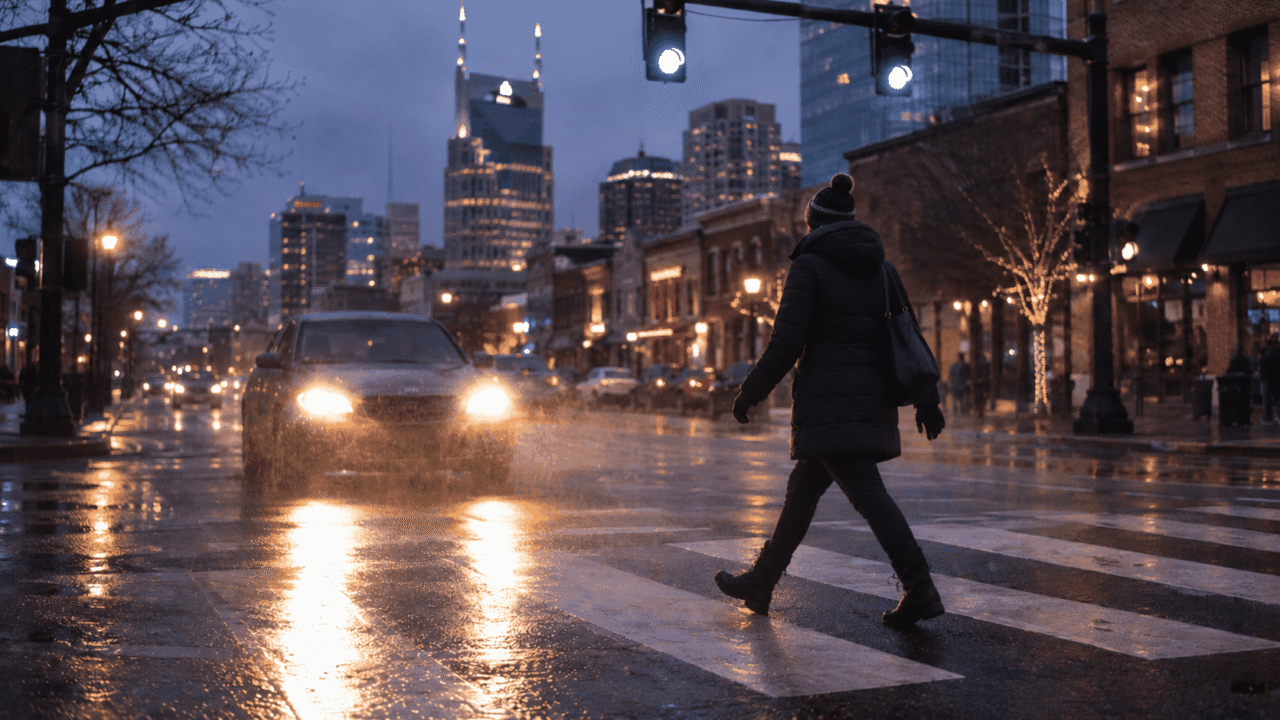
Earlier Sunsets, Darker Commutes, and Distracted Drivers Make Fall the Deadliest Season for Nashville Walkers
Nashville pedestrian accidents have already taken a heavy toll this year. Worst of all, the most dangerous stretch of the year may still lie ahead. Clocks fell back an hour on Nov. 1, turning the streets darker earlier in the evening. As a result, many people are now walking home from work, school, restaurants, or other places in the dark in Nashville.
These pedestrian deaths are part of a troubling trend. By mid-October, 28 people had died while walking or biking in Nashville, according to WSMV. That already tops the 27 deaths in Nashville for all of last year. Members of Metro's Greenways and Open Space Commission have warned that shorter days and poor visibility could add to the danger pedestrians face this fall.
At The Law Office of Eric Beasley, our Nashville pedestrian accident attorneys see how these crashes play out once the sun sets earlier, from drivers who never slowed down to insurance companies that blame the person who was hit. Tennessee law puts the duty to watch for people on foot squarely on drivers, and that duty grows when visibility drops.
Key Takeaways
|
Why Are There So Many Pedestrian Accidents This Year in Nashville?
Nashville's pedestrian death toll started climbing early this year. By early June, Metro police had counted 14 pedestrian deaths, according to WKRN. At the same point in 2025, only three pedestrians had been killed. Fatal crashes of all kinds rose too, from 32 to 45 over the same stretch. Darker months were still ahead when those numbers came out.
Many of these deaths happened on the same busy roads. Murfreesboro Pike, Gallatin Pike, and Lafayette Street all saw fatal crashes this year. Speeding, poor lighting, and unsafe crossings played a role in several of them, WSMV reported. Some drivers also fled. In June, a pickup truck hit four people in Midtown and drove away.
Metro Council responded in July. Members passed a resolution urging faster Vision Zero safety work from the Nashville Department of Transportation. The measure asks the department to speed up safety improvements in the city's highest-risk areas and to submit a list of interim fixes by the end of 2026. Those projects take time to build. Until they're finished, the duty to watch for people on foot rests with every driver on the road.
Darker Evenings Put Nashville Pedestrians at Greater Risk
The time change moves the same rush-hour traffic into darkness overnight. A walk home that happened in daylight in October now happens under streetlights in November. Some drivers keep moving at daytime speeds anyway. They do it with far less ability to spot a person crossing the road ahead.
National numbers show how much darkness matters. The National Highway Traffic Safety Administration (NHTSA) reports that 76% of pedestrian deaths in 2024 happened in the dark. In winter, one-third of those deaths occurred between 6 p.m. and 8:59 p.m. That window lines up closely with Nashville's evening commute.
Fall and winter weather makes things worse. Rain, fog, and wet pavement cut visibility and lengthen stopping distances. Glare from wet roads and oncoming headlights can hide a person in the street until the last second. These conditions call for drivers to slow down and watch more carefully.
Where Do Nashville Pedestrian Crashes Happen After Dark?
Most deadly pedestrian crashes happen away from intersections. NHTSA found that 73% of pedestrian deaths in 2024 occurred at locations that weren't intersections. Many Nashville corridors stretch for long distances between marked crossings. People walking to a bus stop or a grocery store often have no crosswalk nearby.
Nashville started this fall at a disadvantage. In 2024, the city's pedestrian death rate was 3.97 per 100,000 residents, according to the same NHTSA report. The national rate was 2.08. Earlier darkness adds even more danger to roads that were already deadly for people on foot.
The latest federal and local numbers show how darkness, crash location, and drivers who flee shape these deaths.
| Finding | Figure | Source |
|---|---|---|
| U.S. pedestrian deaths that happened in the dark (2024) | 76% | NHTSA |
| Winter pedestrian deaths between 6 p.m. and 8:59 p.m. (2024) | 33% | NHTSA |
| Pedestrian deaths away from intersections (2024) | 73% | NHTSA |
| Pedestrians killed by hit-and-run drivers (2024) | 24% | NHTSA |
| Nashville pedestrian death rate per 100,000 residents (2024) | 3.97 (U.S.: 2.08) | NHTSA |
| Nashville walking and biking deaths by mid-October 2026 | 28 (27 in all of 2025) | Metro Greenways and Open Space Commission |
Greenway crossings are another growing concern. Commission members called for safety reviews at spots where trails meet city streets. Walkers, runners, and cyclists who use the greenways after work now reach those crossings in the dark. A driver who isn't watching may not notice anyone until impact.
What Driver Mistakes Cause Most Pedestrian Crashes After Dark?
Nighttime pedestrian crashes usually trace back to choices drivers make behind the wheel. These common mistakes cause serious injuries on Nashville streets after dark and often become the key evidence in a pedestrian injury claim.
- Speeding – Higher speeds shrink a driver's time to react to someone in the headlights. At night, that can leave no room to stop.
- Distracted Driving – A glance at a phone on a dark road can hide a pedestrian completely. Darkness leaves almost no margin for error.
- Failing to Yield at Crosswalks – Drivers turning at dusk often watch for gaps in traffic and miss a person already in the crosswalk.
- Hit-and-Run Crashes – NHTSA found that 24% of pedestrians killed in 2024 were struck by hit-and-run drivers. Darkness can help them escape.
Proving one of these mistakes often depends on evidence that doesn't last long. Business cameras and traffic systems may erase recordings within days. Video footage of a Tennessee car accident can show whether a driver was speeding, looking down, or never braked. Phone records need attention early too.
Does Tennessee Law Require Drivers to Adjust When It's Dark?
Yes. Tennessee Code Annotated Section 55-8-136 requires every driver to use due care to avoid hitting a pedestrian. Drivers must keep a safe lookout, drive at a safe speed, and keep their vehicles under control. They must also give full attention to driving under the existing circumstances.
Darkness is one of those circumstances. The Tennessee Attorney General addressed low-visibility driving in a formal opinion. It found that drivers must change their habits when a reasonable person would. The opinion lists time of day among the factors that shape what a careful driver should do.
This rule protects people walking at night. The law applies the duty regardless of the speed limit or who had the right of way. A driver going the speed limit can still be responsible (liable) for hitting someone they should have seen. Driving too fast in the dark carries real consequences.
How Do Insurance Companies Try to Blame Pedestrians Hit at Night?
Insurance companies know nighttime crashes leave room for doubt about what a driver could or should have seen. Adjusters often try to shift blame onto the person who was hit with familiar arguments, hoping to cut what the company pays or deny the claim outright.
- Dark Clothing Argument – Adjusters may claim the pedestrian was impossible to see. That ignores a driver's duty to slow down enough to spot people.
- Missing Crosswalk Argument – Insurance companies may stress that the crash happened outside a crosswalk. Many Nashville roads have no marked crossing for long stretches.
- Came Out of Nowhere Story – A driver's story often goes unchallenged at the scene. Video and witnesses may show the driver simply wasn't looking.
Pedestrian accidents in Tennessee often lead to high-value injury claims. That's one reason insurance companies fight them so hard. Even a small share of blame can shrink a recovery. A larger share can end the claim entirely. Families pursuing a wrongful death claim often face these same tactics.
Straight Talk and Hard Work for Pedestrians Hit in Nashville
A nighttime pedestrian crash can leave you with broken bones, a head injury, or months away from work. Proving what the driver should have seen in the dark takes quick work. Witnesses can disappear fast. Video footage of the crash can be lost or destroyed. Meanwhile, the at-fault driver’s insurance company is likely already building its case against you.
Our Nashville pedestrian accident lawyers dig into what the driver did before impact, from speed and phone use to what the headlights should have revealed. That work led to a $2.5 million settlement for the family of a roadside worker killed by a driver under the influence of fentanyl. Our other case results reflect the same effort, and every client gets our full attention.
Don’t wait to find out what happens after your Nashville pedestrian accident. Contact us to schedule a free consultation. We can meet with you, review the crash, and explain your legal options so you can make informed decisions about what comes next.
"Eric Beasley took my case and totally changed my perspective about personal injury attorneys... My only regret is that I did not call him sooner." — Annette J., ⭐⭐⭐⭐⭐