
Can Expert Witness Disputes Decide A Tennessee Car Accident Appeal?
What Rule 26 Disclosures And Cross-Examination Limits Can Mean For Your Case
When a serious crash turns into a lawsuit, most people assume the fight is about the facts. Who had the right of way. Who ran the stop sign. Who caused the impact.
But in real courtrooms, cases can pivot on a different question entirely: whether the jury should hear a reconstruction witness at all, and whether the other side had a fair chance to challenge that testimony before trial.
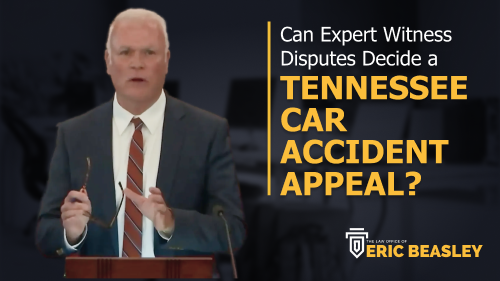
That tension was front and center in Fatima Pajazetovic et al. v. Richard Baker, a Tennessee car wreck case that went through a hung jury, the death of the plaintiff’s accident reconstruction witness, and a second trial where the parties argued about what could be used and what had been preserved for appeal.
During the appeal, Nashville personal injury attorney Eric Beasley argued the case for the appellee and focused the court’s attention on what had actually been preserved for review and why that mattered.
If you’ve been hurt in a Tennessee crash, this matters because procedure can shape the outcome just as much as the facts.
How Rule 26 Disclosures And Rule 705 Arguments Show Up In Real Cases
The dispute centered on whether the defense preserved its arguments for appellate review and whether the trial court’s rulings about testimony should be reversed.
A major issue was preservation, including the idea that in jury cases, issues generally must be raised in a motion for a new trial or they can be treated as waived on appeal.
That isn’t “technical” in the everyday sense. It’s the system’s way of requiring parties to raise alleged errors when the trial judge still has a real chance to address them.
The Core Fight People Don’t See Coming
In a car crash case, an accident reconstruction witness can be a turning point because jurors often treat physics, measurements, and timelines as “objective.” If one side can present a clean narrative supported by calculations, and the other side isn’t allowed to probe how those calculations were reached, the playing field can feel tilted.
That’s why Tennessee’s disclosure rules matter.
The goal of Rule 26 disclosure practice is simple: the other side shouldn’t walk into trial guessing what the witness is going to say, or what the witness relied on to get there.
Beasley’s position was that Rule 26 disclosures, discovery tools, and cross-examination are meant to work together, and that a party can’t skip the available tools for testing an opinion and then claim unfair surprise later.
What A Rule 26 Expert Disclosure Usually Needs
In plain terms, disclosure fights often come down to whether the report and supplemental information give the other side enough to prepare.
These are the details that usually matter most when reconstruction testimony is in play:
- Opinion Summary: The “bottom line” conclusions the witness plans to give the jury, not just a vague statement that one driver caused the crash.
- Key Facts Considered: The data points that matter most, like vehicle damage, impact angles, road geometry, and assumed speeds.
- Method And Steps: The approach used to reach the opinion (for example, measurements, scene analysis, and calculation methodology).
- Materials Reviewed: What the witness relied on, such as photographs, diagrams, inspection notes, deposition transcripts, or other records.
- Limits And Assumptions: What the opinion depends on being true, and what could change the result if a key assumption is wrong.
Even when rules of evidence allow an opinion to be stated without every supporting detail being read to the jury, that doesn’t mean pretrial disclosure stops mattering. The disclosure phase is about avoiding surprise and allowing meaningful preparation.
Why Rule 705 Gets Pulled Into These Disputes
Rule 705 is often cited in accident reconstruction fights because it deals with how an opinion can be presented at trial. One side will argue that a reconstruction witness can testify to conclusions and supporting calculations without having every equation printed inside the written report.
In this case, that tension showed up in familiar form: one side wanted to suggest the witness must be hiding something because calculations weren’t included in the written report, and there was also a fight over whether cross-examination was being used to slip inadmissible police report opinions in through the reconstruction witness.
The real tension is that evidence rules and disclosure rules do different jobs. Evidence rules govern what the jury can hear and the form the testimony can take. Civil procedure rules exist to prevent trial-by-surprise by requiring the other side to understand the witness’s opinions and the basis for them early enough to prepare.
When a court treats Rule 705 as a reason to keep written disclosures lean, the pressure shifts to discovery. If the opposing party wants more detail behind the opinion, the tools are taking the expert’s deposition, serving written discovery, and bringing the dispute to the judge early enough for a pretrial ruling.
A Hung Jury Changes The Temperature But Not The Rules
In Pajazetovic, the first trial ended in a hung jury. That kind of result often ramps up the pressure going into the next round. Both sides know what themes landed, what fell flat, and what needs to be tightened.
But a hung jury doesn’t rewrite the procedural requirements. If an issue wasn’t properly preserved, it can still be lost on appeal.
Why Preservation Can Decide The Appeal Before The Judges Reach The Merits
One of the clearest takeaways from the argument is that appeals can turn on preservation before the court ever reaches the substance of what happened at trial.
In Tennessee jury trials, issues generally must be raised in a post-trial motion for a new trial or they can be waived for appellate review.
If you’re not in the legal world, that can sound harsh. In practice, it’s a built-in safeguard: trial judges should have the first chance to correct errors while the trial record is fresh.
How A Missing Motion For New Trial Can Sink An Appeal
In real cases, it often looks like this:
- No Post-Trial Motion Filed: If the party doesn’t file a motion for a new trial when required, the appellate court may never reach the substance of the complaint.
- Issues Not Raised Can Be Treated As Waived: Even if something felt unfair during trial, appellate judges often can’t address it unless it was raised the right way at the right time.
- Plain Error Is Not A Simple Escape Hatch: Parties sometimes argue an exception, but that’s a steep path and it isn’t a substitute for proper preservation.
That’s the hidden reality: you can believe you’re right about the trial ruling and still lose the appeal because the procedural steps weren’t followed.
When A Witness Becomes Unavailable And Rule 804 Enters The Conversation
This case also raised issues tied to the death of the plaintiff’s reconstruction witness before the second trial.
When a witness becomes unavailable, evidentiary rules can allow the use of prior testimony under certain conditions.
In the Pajazetovic matter, the dispute included whether the defense had a full and fair opportunity to cross-examine in the earlier proceeding, a key theme that often comes up when prior testimony is offered after a witness becomes unavailable.
The Insight Most Injured People Don’t Hear Early Enough
In serious Tennessee car accident litigation, a strong case is also a well-protected record.
That means doing two things at the same time:
- First, developing proof that wins with jurors, like timelines, crash dynamics, medical evidence, and credibility.
- Second, protecting the case procedurally, so the other side can’t win by turning the dispute into a technical trap, and so your own side doesn’t lose rights by missing a deadline or skipping a required motion.
That’s why trial experience can matter. Trials move fast. Judges make real-time rulings. If you’re not ready to preserve the right objections and present the right arguments at the right moment, your case can get boxed in later.
Talk To A Tennessee Lawyer Who Tries Cases
Attorney Eric Beasley regularly addresses issues like witness testimony, disclosure disputes, and trial strategy because he’s spent years in Tennessee courtrooms fighting for injured people.
If you were seriously hurt in a car accident and want straight answers about what your case could involve, the Law Office of Eric Beasley can review what happened and explain your legal options, including what evidence may matter most and what the process can look like if the case doesn’t resolve quickly. To learn more, contact us today for a free consultation.
Click here for a printable PDF of this article, “Can Expert Witness Disputes Decide A Tennessee Car Accident Appeal?”